
The Banking, Financial Services and Insurance (BFSI) industry has always been among the largest custodians of personal data. From customer onboarding and credit evaluation to fraud detection and regulatory reporting, every business process depends on the responsible use of sensitive information.
For many years, the industry's approach to protecting data was centred around three principles:
1. Secure storage
2. Secure transmission
3. and controlled access.
These measures have served organizations well and continue to remain essential. However, the rapid growth of digital banking, AI-driven decision-making, open finance and collaborative ecosystems has introduced a new challenge.
Data is valuable not only when it is stored, but when it is actively being processed. This represents a significant shift in the privacy landscape.
Most security frameworks were designed to protect data at rest and in transit. Yet, during computation, analytics and decision-making, data is often decrypted and exposed to applications, creating an entirely new risk surface.
As financial institutions process millions of customer records every day, protecting “data in use" has become one of the defining challenges of modern data architecture.
It is in this context that Privacy-Enhancing Technologies (PETs) have gained prominence.
PETs are not a replacement for traditional cybersecurity practices. Rather, they extend the privacy and protection model by enabling organizations to derive value from data while significantly reducing unnecessary exposure.
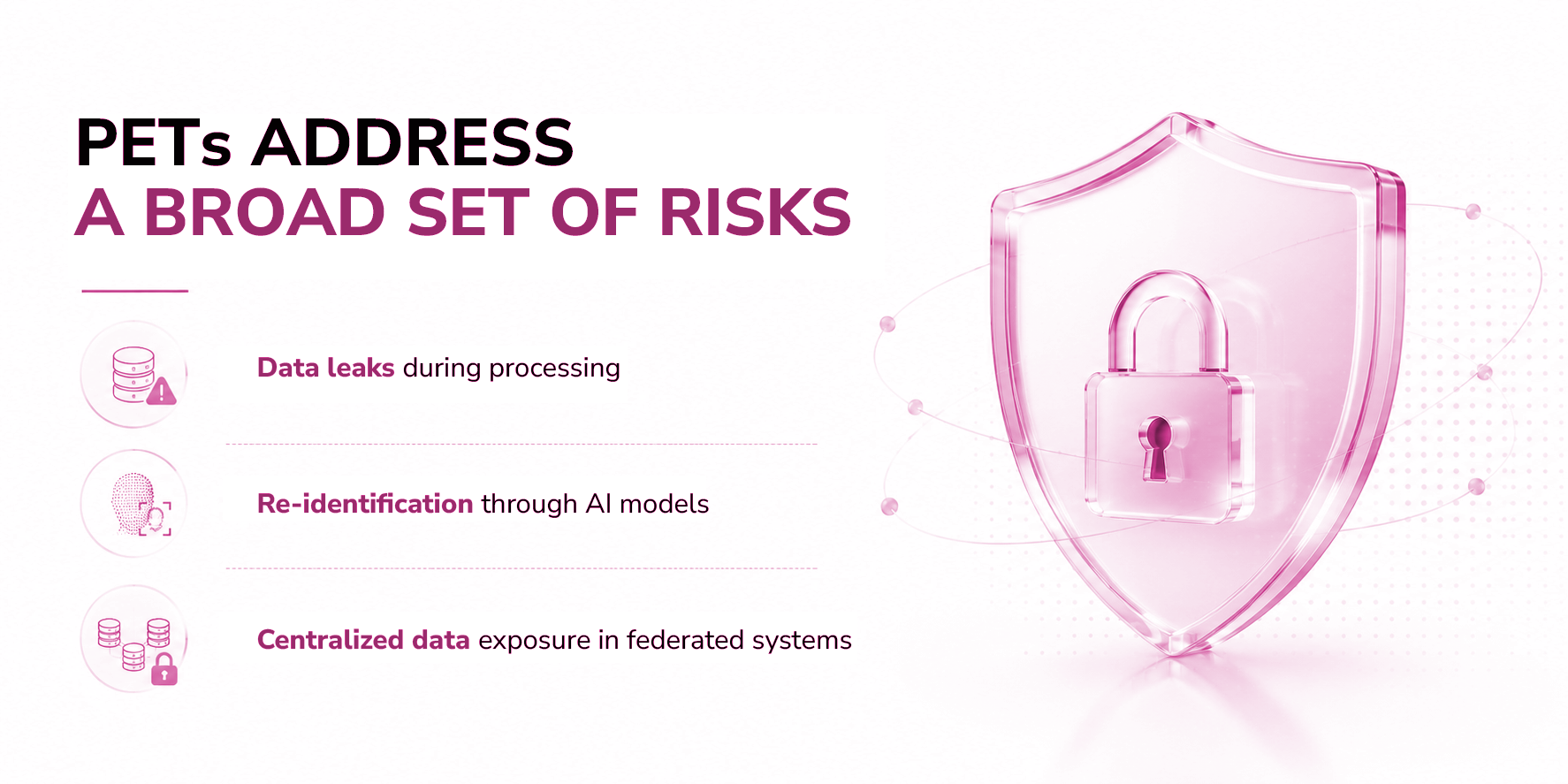
Technologies such as searchable encryption, secure multi-party computation, differential privacy, trusted execution environments and homomorphic encryption are steadily moving into enterprise applications.
Their common objective is simple yet transformative: to process data without making it vulnerable.
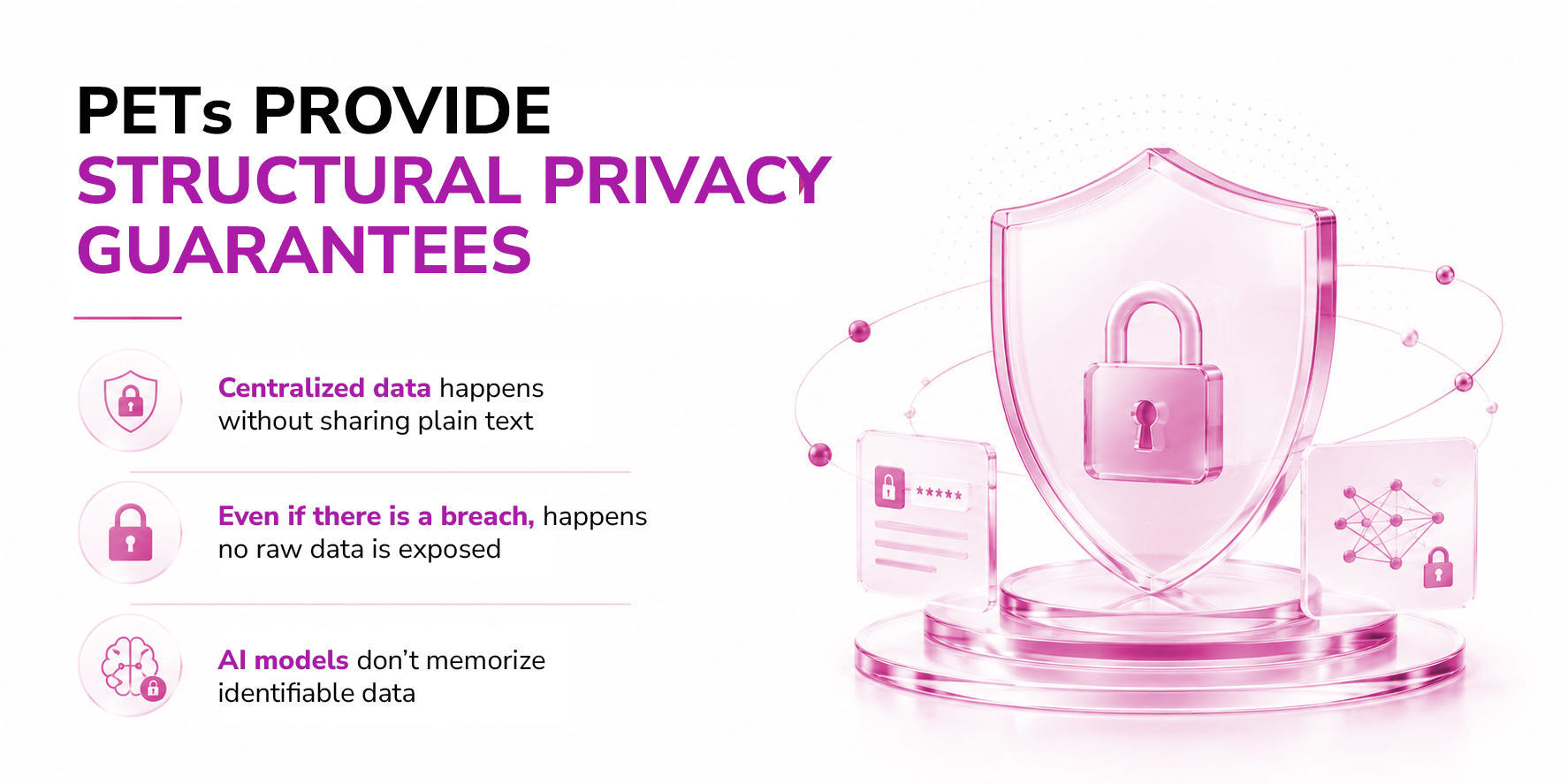
This architectural shift is particularly relevant for the BFSI sector.
Banks must continuously balance two equally important responsibilities.
1. They are expected to leverage data to improve customer experience, strengthen fraud detection, accelerate lending decisions and meet increasingly sophisticated regulatory requirements.
2. At the same time, they must preserve customer trust by ensuring that personal information is protected throughout its lifecycle.
These objectives are not competing priorities. Data protection and innovation are complementary capabilities.
Around the world, data protection regulations are also evolving in this direction. Whether it is India's Digital Personal Data Protection Act, the EU AI Act and Data Act, the underlying expectation is no longer limited to preventing unauthorized access. Organizations are expected to demonstrate responsible data handling.
The future of BFSI will increasingly depend on collaborative intelligence. Financial institutions will share insights across business units, integrate with fintech ecosystems, adopt AI at scale and operate within interconnected digital infrastructures. Such an environment demands technologies that enable secure collaboration without exposing the underlying personal data.
Privacy-Enhancing Technologies provide the foundation for this next generation of trusted digital systems.
Looking ahead, the conversation around privacy should gradually move beyond encryption, access management and compliance checklists. These will continue to remain important, but they represent only part of the solution.
The larger opportunity lies in designing solutions where data protection is embedded into computation itself, like Posidex’s PII Data Vault.